Designing the future, delivering the change Reshaping EU Customs for the decades ahead Brussels,
Designing the future, delivering the change Reshaping EU Customs for the decades ahead Brussels,
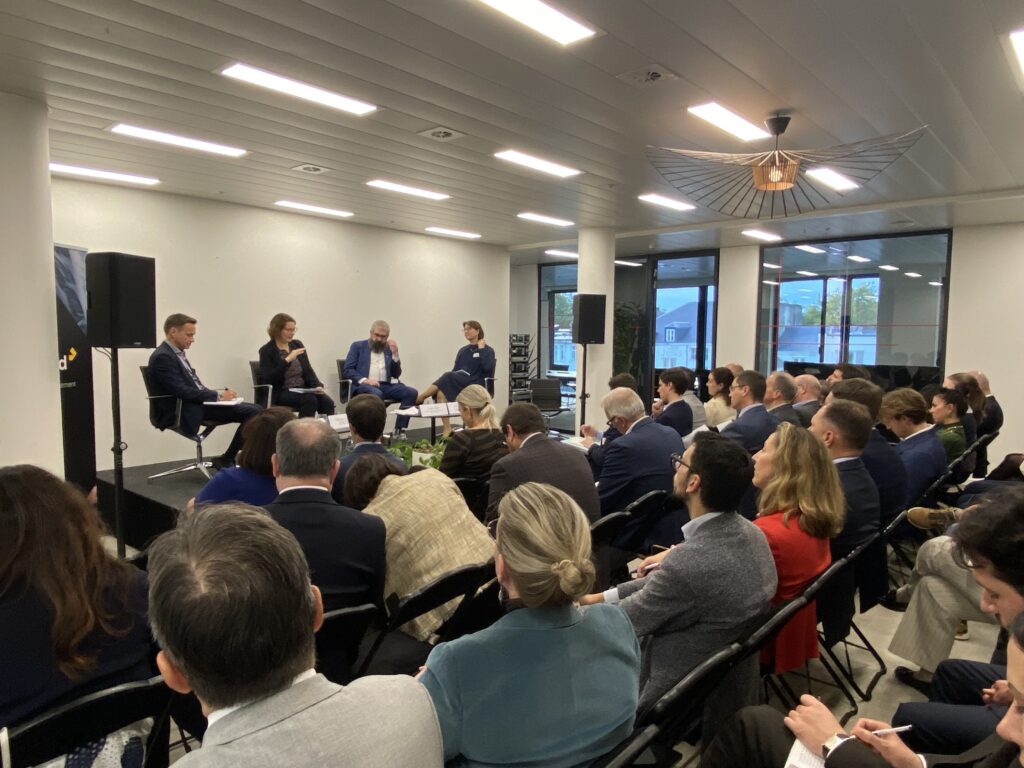
On 12 October, the European Express Association (EEA) and its Trade Facilitation Committee hosted a high-level event entitled “Designing the future, delivering the change: Reshaping EU Customs for the decades ahead”, focusing on the future of the EU Customs Union.
The event brought together Charlotte Merlier, Cabinet Member responsible for customs in the Cabinet of Commissioner Maroš Šefčovič, and Eoghan Ryan, Customs Attaché at the Permanent Representation of Ireland to the European Union, representing the Council Presidency. They were joined by representatives of customs authorities, industry and the wider trade community.
“The successful transformation of the EU Customs Union will depend on early and structured cooperation between policymakers, customs authorities and trade, bringing together legislative ambition and practical expertise to create a framework that protects citizens, facilitates legitimate trade and strengthens Europe’s competitiveness.”, said Katalin Skram, Chair of the Trade Facilitation Committee, European Express Association EEA
“We need to create a Customs Union that is agile enough to adapt quickly to a changing international environment, while making better use of reliable data and strengthening cooperation across Europe”, said Charlotte Merlier, Cabinet Member of Commissioner Maroš Šefčovič, European Commission
“The real challenge is not simply adopting ambitious customs legislation, but making it work in practice. We must not lose momentum: successful implementation will require harmonised rules, adequate resources and a shared commitment from all stakeholders", said Eoghan Ryan, Irish Customs Attaché, Permanent Representation of Ireland to the EU
With the basic legal framework now in place, many important decisions still lie ahead. The next stages will shape how the new customs structure operates in practice and whether it delivers greater consistency, effective controls and genuine simplification across the European Union.
The express industry, which operates every day across borders, jurisdictions and global supply chains, can help with practical experience identify potential challenges and ensure that new requirements are workable, effective and capable of operating at scale. This practical expertise should not be viewed simply as representing a private interest. Making European legislation operationally workable is itself a European interest. Rules that can be implemented effectively are better able to protect citizens, facilitate legitimate trade and support Europe’s competitiveness.
The EEA and its members stand ready to continue supporting EU policymakers and customs authorities through constructive dialogue and practical input as the future customs framework takes shape. Early, structured and meaningful cooperation will be essential to ensuring that the reform delivers a stronger, safer and more consistent EU Customs Union.